

35 Saudi Driving Test Questions & Answers (2026 Dallah Computer Exam Cheat Sheet)

Table of Contents
The Dallah computer test is the official theoretical exam required to earn your driver's license in the Saudi driving test. It consists of 35 multiple-choice questions with a 30-minute time limit. To pass on your first attempt, you must score at least 22 out of 35 (a passing mark of roughly 63%). The exam is administered on touchscreen computers across authorized testing centers, including Dallah Driving School branches, and is offered in 7 languages.
Quick Overview of the Computer Test
Every driving license applicant in Saudi Arabia must pass this theoretical exam before progressing to yard maneuvers and the final road test. To help you prepare thoroughly, you can also download our free Saudi driving test guide PDF.
| Feature | Key Details |
|---|---|
| Total Questions | 35 Multiple-Choice Questions |
| Passing Score | At least 22 correct answers (63% pass mark) |
| Time Allowed | 30 minutes (countdown timer on screen) |
| Testing Method | Touchscreen computer at the driving center |
| Skipping Questions | Allowed — you can skip and return before submitting |
| Main Topics | Traffic Rules & Road Signs |
| Available Languages | Arabic, English, Urdu, Hindi, Bangla, Tagalog, Malayalam |
| Results | Displayed immediately on screen upon completion |
What Topics Are Covered on the Exam?
The computer test evaluates your road awareness and driving safety across two essential areas:
1. Traffic Rules, Priority & Safe Driving Habits
This part forms the largest portion of the exam. It checks your understanding of:
- Right-of-way rules at intersections, roundabouts, and pedestrian crossings.
- Speed limits on expressways, city streets, and school zones.
- Overtaking and lane discipline around solid and broken road markings.
- Common violations and penalties under Saudi traffic rules and laws.
- Essential safety habits, including seatbelt compliance and avoiding mobile phone distractions.
2. Road Signs & Markings
This part tests how quickly and accurately you recognize road signs by shape, color, and symbol. You can practice all categories in our Warning Signs Mock Test and Regulatory Signs Mock Test:
- Warning Signs (Triangles with red border): Alert drivers to upcoming road hazards like sharp curves, steep slopes, or pedestrian zones.
- Prohibitory Signs (Circles with red border): State mandatory restrictions such as No Entry, No U-Turn, or No Overtaking.
- Mandatory Signs (Solid blue circles): Give positive instructions you must obey, such as a required turning direction or minimum speed.
- Stop Signs (Red octagons): Require a mandatory complete stop at junctions.
- Guide & Information Signs (Rectangular blue or green): Provide directions, distances, and highway services.
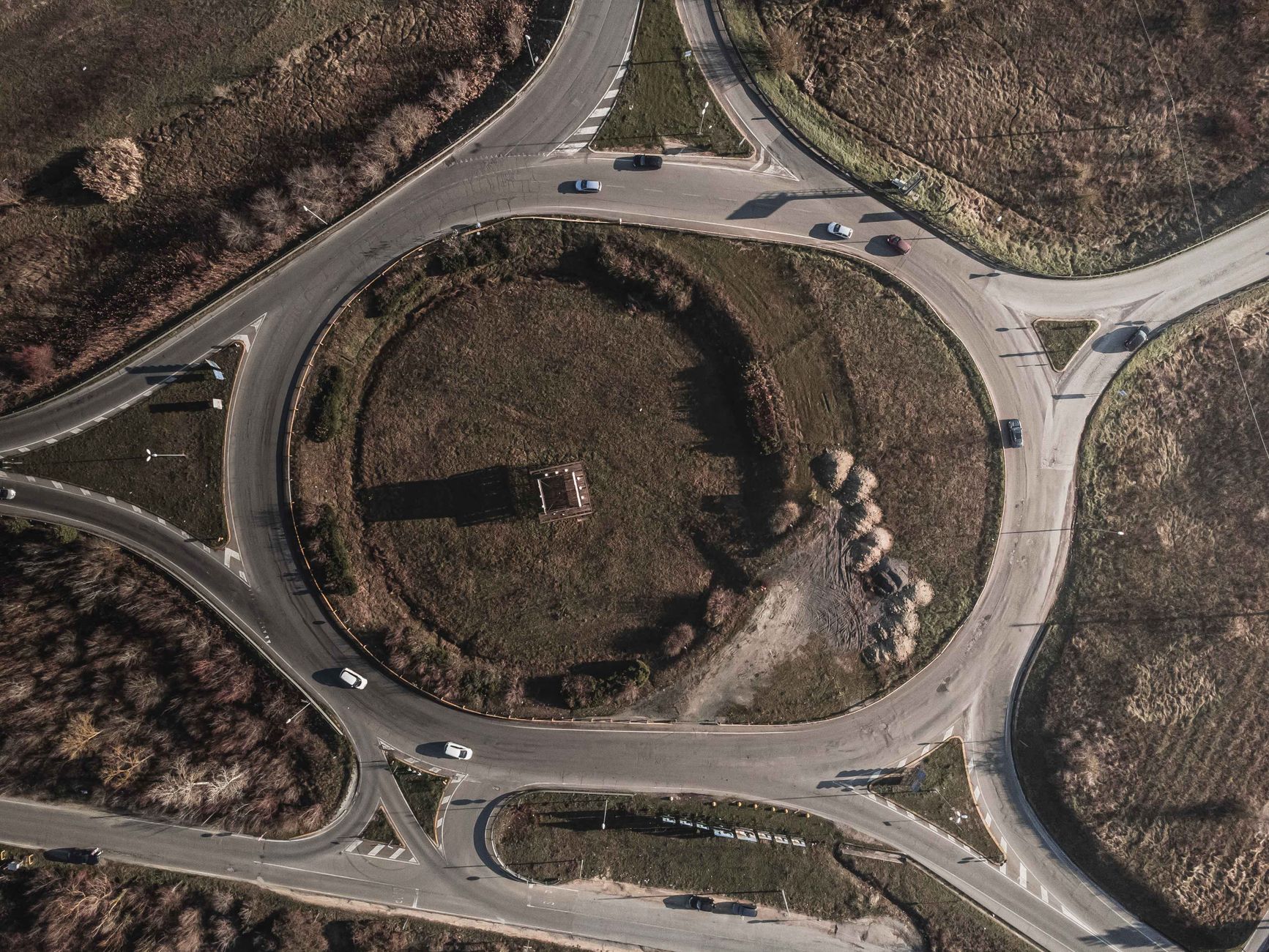
Roundabout Right-of-Way Rules (Where Most Applicants Make Errors)
Roundabout questions are among the most common reasons candidates lose points on the computer test. Understanding right of way and proper lane discipline inside a roundabout is critical for passing.
The Golden Rule of Saudi Roundabouts
Vehicles already inside the roundabout always have the right of way. Before entering, you must slow down and come to a complete stop if needed until circulating traffic has passed.
Roundabout Lane Discipline Rules
- Right Lane (Outer Lane): Best for taking the 1st exit (turning right) or proceeding straight ahead (2nd exit). Signal right when turning right; signal right just after passing the exit before yours when going straight.
- Middle Lane: Best for going straight through the roundabout (2nd exit). Turn on your right indicator immediately after passing the first exit.
- Left Lane (Inner Lane): Best for turning left (3rd exit) or making a complete U-turn (4th exit). Signal left upon entering, then indicate right when switching lanes to exit.
Practice Question Bank (35 Questions with Explanations)
Review these 35 frequently asked questions to test your knowledge of road rules, signs, and speed limits. To practice under realistic exam conditions with a live timer, try our interactive All-in-One Saudi Driving Mock Test.
Traffic Rules & Right-of-Way Questions
Question 1: Who has the right of way at an intersection without traffic lights or yield signs?
- A) The vehicle traveling at the highest speed
- B) The vehicle coming from the left
- C) The vehicle approaching from your right (Correct)
- D) The vehicle that arrives last
Explanation: At an uncontrolled intersection in Saudi Arabia, priority is always given to vehicles approaching from your right side.
Question 2: When approaching a roundabout, what should you do regarding traffic already inside?
- A) Speed up to merge before oncoming vehicles
- B) Honk your horn to request right of way
- C) Yield and stop if necessary to let vehicles inside pass (Correct)
- D) Vehicles inside must yield to entering traffic
Explanation: Traffic already circulating inside the roundabout holds full right of way. Entering drivers must yield.
Question 3: What does a single solid white line painted between traffic lanes indicate?
- A) Lane changing is permitted with caution
- B) Lane changing and overtaking are strictly prohibited (Correct)
- C) The lane is reserved exclusively for public buses
- D) You must increase your speed
Explanation: A solid white line prohibits lane changes and overtaking. You may only change lanes across broken lines.
Question 4: Under what condition is making a U-turn permitted at a signalized intersection?
- A) At any time as long as your hazard lights are on
- B) Whenever there is no police vehicle present
- C) Only when a designated U-turn sign or arrow signal permits it and oncoming traffic is clear (Correct)
- D) U-turns are never allowed at signalized intersections
Explanation: You may only perform a U-turn at an intersection if an official road sign or dedicated traffic light arrow explicitly permits it.
Question 5: When pulling out from a parking space onto a main road, who has priority?
- A) You have priority because you signaled first
- B) Vehicles already moving on the main road have priority (Correct)
- C) Priority is shared equally
- D) Pedestrians on the sidewalk must stop for your vehicle
Explanation: Traffic already traveling on a public road always has priority over vehicles exiting parking spots or side alleys.
Question 6: When an emergency vehicle (ambulance or fire truck) approaches with sirens or flashing lights, what must you do?
- A) Continue driving at the legal speed limit
- B) Stop immediately in the middle of your lane
- C) Pull over to the far right side of the road safely and stop (Correct)
- D) Speed up to stay ahead of the emergency vehicle
Explanation: You must safely yield the road by moving to the right lane or shoulder to allow emergency vehicles unimpeded passage.
Question 7: What is the minimum safe following distance behind the car in front of you under normal driving conditions?
- A) 1 second
- B) 2 seconds (the 2-second rule) (Correct)
- C) 5 meters
- D) Half a vehicle length
Explanation: Maintain at least a 2-second gap under clear weather conditions. Increase this to 4 seconds during rain, dust storms, or fog.
Question 8: What is the rule regarding mobile phone usage while driving in Saudi Arabia?
- A) Allowed if held in your non-dominant hand
- B) Allowed only while stopped at red traffic lights
- C) Strictly prohibited unless using a hands-free system (Correct)
- D) Allowed for texting but not for voice calls
Explanation: Holding a mobile phone while driving is a major traffic violation caught automatically by Saher cameras and carries heavy fines.
Question 9: At an intersection controlled by a STOP sign, what is the required driver behavior?
- A) Slow down and proceed if no vehicles are visible
- B) Bring your vehicle to a complete stop before the stop line, check traffic, then proceed (Correct)
- C) Honk and continue driving
- D) Stop only if pedestrians are crossing
Explanation: A stop sign requires a complete wheel stop behind the white stop line, regardless of whether traffic appears clear.
Question 10: When driving on a multi-lane highway, which lane is designated for slower traffic?
- A) The far left lane
- B) The center lane only
- C) The far right lane (Correct)
- D) Any lane chosen by the driver
Explanation: The far left lane is reserved strictly for overtaking. Slower traffic must stay in the right lanes.
Traffic Signs & Road Markings Questions
Question 11: What shape are official Saudi traffic warning signs?
- A) Triangular with a red border and white/yellow background (Correct)
- B) Circular with a red border
- C) Octagonal with white lettering
- D) Rectangular with a blue background
Explanation: Warning signs are triangular. They warn drivers of hazards ahead, such as sharp turns, pedestrian zones, or road narrowing.
Question 12: What does an inverted triangular sign (pointing downwards) mean?
- A) Stop completely
- B) Yield / Give Way to traffic on the intersecting road (Correct)
- C) No entry allowed
- D) End of speed limit zone
Explanation: The yield sign is an inverted triangle. It requires you to slow down and stop if necessary to yield to oncoming traffic.
Question 13: What is the meaning of a red circular sign with a white horizontal bar in the center?
- A) No Entry (Entry prohibited for all vehicles) (Correct)
- B) Road closed ahead for maintenance
- C) Parking prohibited
- D) One-way traffic ahead
Explanation: The "No Entry" sign is a solid red circle with a horizontal white rectangle in the middle. Entering this road is strictly illegal.
Question 14: What shape and color is an official STOP sign in Saudi Arabia?
- A) Red triangle pointing upwards
- B) Blue circle with white text
- C) Red octagon (8-sided) with white "STOP" text in English and Arabic (Correct)
- D) Yellow rectangle
Explanation: Stop signs are red octagons featuring white text in both Arabic (قف) and English (STOP).
Question 15: What does a circular sign with a solid blue background indicate?
- A) A warning about bad weather
- B) A mandatory instruction (e.g., mandatory direction or minimum speed) (Correct)
- C) Tourist information zone
- D) Hospital parking area
Explanation: Blue circular signs give mandatory orders (such as "Turn Right Only" or "Pass This Side").
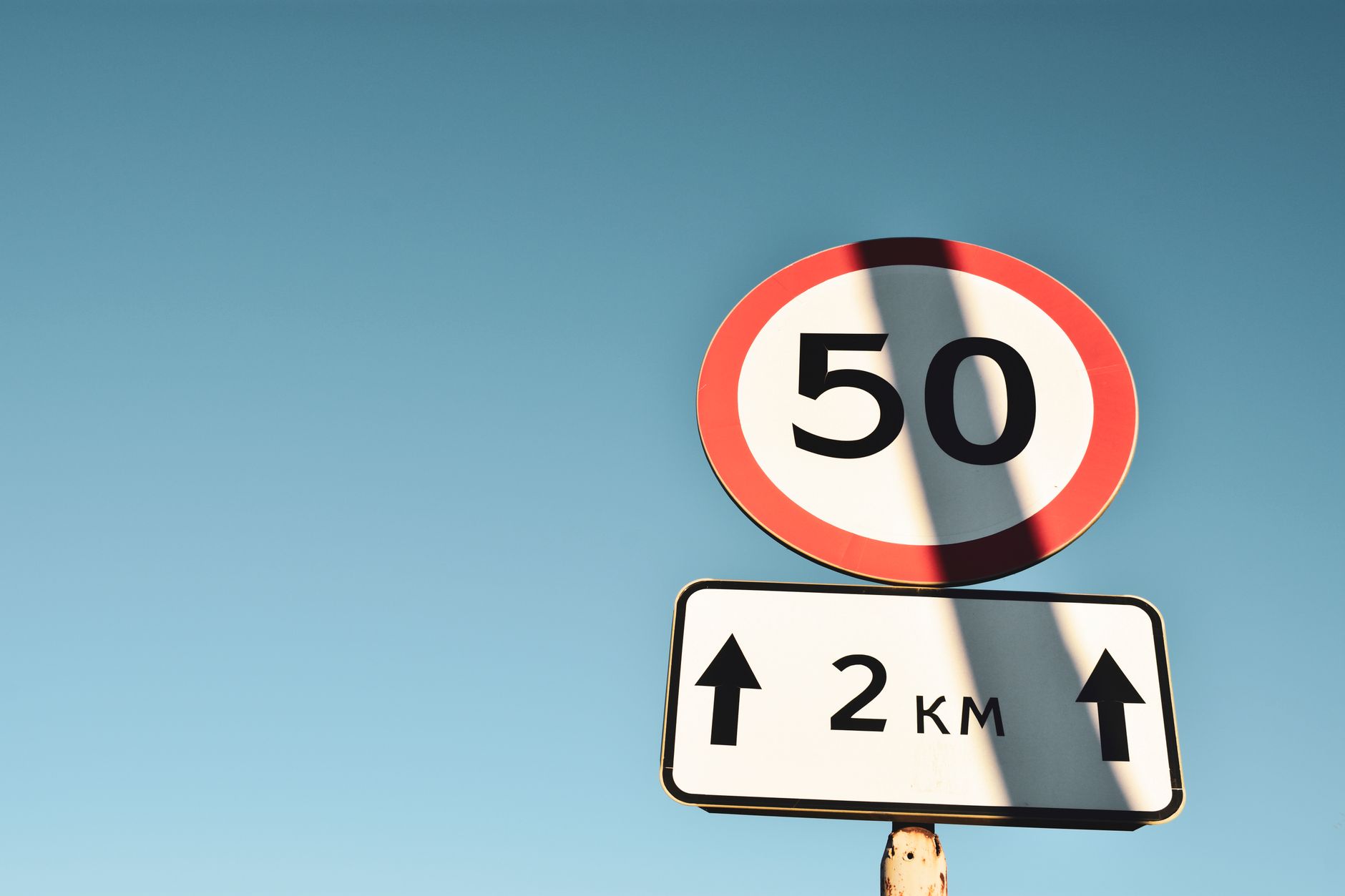
Question 16: What does a circular sign with a red border containing the number "80" mean?
- A) Recommended speed is 80 km/h
- B) Maximum permitted speed limit is 80 km/h (Correct)
- C) Minimum speed limit is 80 km/h
- D) Distance to next town is 80 kilometers
Explanation: Red circular signs containing numbers indicate the maximum legal speed limit on that road section.
Question 17: What do yellow diagonal grid lines painted on an intersection road surface indicate (Yellow Box Junction)?
- A) Designated parking area for taxis
- B) Do not enter the yellow box unless your exit route is clear (Correct)
- C) Speed limit is reduced by 50% in this zone
- D) Reserved area for pedestrian crossing only
Explanation: You must not enter a yellow box junction if your exit is blocked by traffic congestion, even if your traffic light is green.
Question 18: What does a sign showing a red car alongside a black car inside a red circular border mean?
- A) Two-way traffic ahead
- B) Overtaking is strictly prohibited (Correct)
- C) Car racing track ahead
- D) Fast lane available on the left
Explanation: This regulatory sign prohibits motor vehicles from overtaking other moving vehicles on that section of road.
Question 19: What does a blue rectangular sign showing a white "P" with a wheelchair symbol indicate?
- A) Parking for public buses only
- B) Parking reserved exclusively for persons with disabilities (Correct)
- C) Free parking for all vehicles
- D) Emergency vehicle stopping area
Explanation: Blue rectangular "P" signs with handicap symbols designate parking spaces reserved solely for drivers with disability permits.
Question 20: What does a triangular warning sign displaying two wavy black lines mean?
- A) River bank ahead
- B) Uneven or bumpy road surface ahead (Correct)
- C) Winding road with multiple curves
- D) Slippery road surface when wet
Explanation: This warning sign alerts drivers to uneven road conditions, humps, or dips requiring reduced speed.
Speed Limits, Violations & Fines Questions
Question 21: What is the standard maximum speed limit in residential areas and school zones in Saudi Arabia unless otherwise posted?
- A) 30 km/h to 50 km/h (Correct)
- B) 70 km/h
- C) 90 km/h
- D) 100 km/h
Explanation: School zones and residential roads have reduced speed limits (typically 30–50 km/h) to protect pedestrians and children.
Question 22: What is the standard maximum speed limit for light passenger vehicles on major Saudi expressways and intercity highways?
- A) 100 km/h
- B) 120 km/h (up to 140 km/h where designated by official signs) (Correct)
- C) 160 km/h
- D) No speed limit on highways
Explanation: The highway limit is generally 120 km/h, though major highways (such as Riyadh–Jeddah) permit up to 140 km/h where posted.
Question 23: What is the penalty fee range for running a red traffic light in Saudi Arabia?
- A) SAR 150 – SAR 300
- B) SAR 500 – SAR 1,000
- C) SAR 3,000 – SAR 6,000 (Correct)
- D) SAR 10,000
Explanation: Running a red light is a major traffic violation carrying a fine between SAR 3,000 and SAR 6,000.
Question 24: What is the fine for failing to wear a seatbelt while driving or riding as a front-seat passenger?
- A) SAR 150 – SAR 300 (Correct)
- B) SAR 1,000 – SAR 2,000
- C) SAR 3,000
- D) Suspension of driving license
Explanation: Failure to wear a seatbelt incurs an automated or manual traffic fine ranging from SAR 150 to SAR 300.
Question 25: How many total traffic black points recorded within a 1-year period result in a driver's license suspension?
- A) 12 points
- B) 18 points
- C) 24 points (Correct)
- D) 30 points
Explanation: Reaching 24 black points within one Hijri year leads to a 3-month license suspension on the first occurrence.
Question 26: What is the violation fine for parking in a spot designated for persons with disabilities without a valid permit?
- A) SAR 100
- B) SAR 500 – SAR 1,000 (Correct)
- C) SAR 3,000
- D) Vehicle impoundment only
Explanation: Unauthorized parking in handicap spaces carries a fine of SAR 500 to SAR 1,000.
Question 27: When driving in heavy fog or dust storms with low visibility, which lights should you turn on?
- A) High-beam headlights and hazard lights
- B) Low-beam headlights and fog lights (do not use hazard lights while moving) (Correct)
- C) Hazard lights only
- D) Keep all lights off to avoid glare
Explanation: Use low-beam headlights and fog lights. Hazard lights should only be used when your vehicle is completely stopped in an emergency.
Question 28: What is the penalty for driving a vehicle without valid motor insurance (Tameen)?
- A) SAR 100 – SAR 150 (Correct)
- B) SAR 1,000 – SAR 2,000
- C) Imprisonment for 5 days
- D) Vehicle impoundment
Explanation: Driving without valid vehicle insurance carries a fine between SAR 100 and SAR 150.
Question 29: At what age can a resident in Saudi Arabia apply for a private driver's license (Rukhsat Qiyadah)?
- A) 16 years old
- B) 17 years old (for temporary permit)
- C) 18 years old (for full private license) (Correct)
- D) 21 years old
Explanation: Applicants must be at least 18 years old for a full private driving license (17 years for a 1-year temporary driving permit).
Question 30: What is the traffic fine for throwing trash or items out of a moving vehicle onto the road?
- A) SAR 500 – SAR 1,000 (Correct)
- B) SAR 100 – SAR 200
- C) SAR 2,000
- D) Community service
Explanation: Littering from a vehicle is an environmental and traffic violation subject to a fine between SAR 500 and SAR 1,000.
Question 31: When are you legally permitted to overtake a vehicle on the right side in Saudi Arabia?
- A) Whenever you are running late
- B) When the vehicle in front is signaling and making a left turn, or on a multi-lane one-way road (Correct)
- C) Never under any circumstance
- D) Only on desert unpaved roads
Explanation: Overtaking on the right is generally prohibited, except when the vehicle ahead has clearly indicated an intention to turn left and has moved into position.
Question 32: What is the required action when you see a yellow flashing traffic light at an intersection?
- A) Stop completely and wait for a green light
- B) Proceed with extreme caution and reduce your speed (Correct)
- C) Accelerate to clear the intersection quickly
- D) Reverse immediately
Explanation: A flashing amber/yellow light warns drivers of an active intersection where they must slow down and proceed with heightened caution.
Question 33: What should you do if your vehicle suffers a tire blowout at high highway speeds?
- A) Slam on the brakes as hard as possible
- B) Pull the handbrake immediately
- C) Hold the steering wheel firmly, ease off the accelerator gradually, and do not brake abruptly (Correct)
- D) Turn the steering wheel rapidly to the shoulder
Explanation: In a tire blowout, sudden braking or sharp steering can cause vehicle rollover. Maintain a firm grip on the wheel and let the vehicle decelerate naturally.
Question 34: What is the legal blood alcohol concentration (BAC) limit for drivers in Saudi Arabia?
- A) 0.00% (Strict zero-tolerance policy) (Correct)
- B) 0.05%
- C) 0.08%
- D) 0.02%
Explanation: Saudi Arabia enforces a strict 0.00% zero-tolerance law for alcohol and narcotics, carrying severe criminal penalties, imprisonment, and vehicle confiscation.
Question 35: What is the primary purpose of headrests in passenger vehicles?
- A) To allow drivers to sleep comfortably while stopped
- B) To prevent neck and whiplash injuries during rear-end collisions (Correct)
- C) To improve vehicle aerodynamics
- D) To support head movement during cornering
Explanation: Correctly adjusted headrests protect vehicle occupants against serious whiplash and neck injuries in the event of a rear-impact collision.
Tips for the Computer Exam Screen
Arriving at the test hall prepared for the touchscreen interface will save you time and reduce test anxiety. For more practical advice, read our guide on expert tips to pass the driving test.
1. Choose Your Preferred Language First
Before starting the exam, the welcome screen prompts you to choose your preferred language: Arabic, English, Urdu, Hindi, Bangla, Tagalog, or Malayalam. Select the language you used during your practice tests.
2. Use the "Skip" Feature
The computer interface includes a "Skip" button on every question screen:
- If a question seems confusing or tricky, click Skip.
- The system moves to the next question without deducting marks.
- After completing all 35 questions, the computer automatically loops back to your skipped questions.
- Answer all easy questions first to build your score before spending time on complex questions.
3. Monitor the 30-Minute Timer
A countdown clock displays in the top corner of the screen throughout the test. With 35 questions and 30 minutes, you have roughly 50 seconds per question, which is plenty of time if you read each option carefully.
4. Instant Results
Once you submit your final question (or reach the 22 correct answer threshold), the computer screen displays your result immediately (PASS or FAIL) along with a score summary.
Documents You Need on Test Day
To sit for your computer theory test, you must present the required original documents at the driving school registration desk:
| Document | Requirement | Notes |
|---|---|---|
| Original National ID / Iqama | Must be valid (unexpired) | Bring original + 2 clear copies |
| Passport (for expats) | Original + photo/visa page copy | Required for identity verification |
| Medical Report (Efada) | Eye test, blood group, general check | Issued electronically by an approved medical center |
| Passport Photographs | 4 photos (4x6 cm, white background) | Standard Saudi driver ID size |
| Foreign Driving License | Original + certified Arabic translation | Optional: May reduce required practical training hours |
| Absher Appointment Slip | Printed booking confirmation | Showing your appointment time and school location |
What Happens If You Don't Pass?
If you score under 22 correct answers, do not worry — you can retake the test:
- Review Weak Topics: The computer screen displays a diagnostic summary showing whether you missed traffic rules, speed limits, or road signs.
- Pay the Retest Fee: Pay the official computer retest fee through the driving school cashier or SADAD.
- Reschedule Test Date: Book your retake appointment through your driving school portal or Absher. Retake slots are generally available within 1 to 2 weeks.
- Practice Before Retaking: Use practice quizzes to revise road signs and speed limits before your next attempt.
What Comes Next After Passing?
Once you pass your computer theory test, your pass status is updated automatically in the traffic system. You will immediately proceed to book your practical driving lessons and track training sessions (parallel parking, 90-degree parking, and road maneuvers) at your driving school. To prepare for the practical evaluation, review our comprehensive practical driving test tips and maneuvers guide.

Mohammed Hamouda
With years of experience in driving regulations, road safety, and compliance auditing, Mohammed plays a crucial role in ensuring the highest standards of driving education and operational integrity. His in-depth knowledge of Saudi traffic laws, driver training programs, and safety protocols makes him a trusted expert in the field. As an author on DrivingTestKSA.com, Mohammed shares valuable insights on obtaining a Saudi driving license, preparing for driving tests, and understanding traffic regulations in the Kingdom.