


How to Pass Saudi Driving Practical Test: Parking, Yard Maneuvers & Road Guide

Table of Contents
Passing the practical evaluation for your Saudi driving test requires demonstrating calm vehicle control across specific yard maneuvers—such as parallel parking, 90-degree garage parking, hill starts, and track navigation—followed by adhering to road safety rules during the final Traffic Department (Muroor) road test.
This practical guide breaks down every stage of the training and testing process, giving you the exact reference points for yard parking and the key driving habits examiners look for.
1. The Initial Skill Assessment (Taqyeem)
Before beginning your practical training sessions at licensed centers like Dallah Driving School branches, every applicant takes a quick 5-minute skill evaluation drive known as Taqyeem.
An instructor evaluates your steering smoothness, pedal control, braking, and overall road confidence. Based on your driving level, you are assigned to one of three training tiers:
| Training Tier | Target Applicant | Required Training Hours | Program Focus |
|---|---|---|---|
| Advanced Tier | Valid foreign license holders & experienced drivers | 6 Hours (Theory + Practical) | Traffic laws, roundabout rules & yard maneuver check |
| Intermediate Tier | Drivers with basic steering & pedal skills | 15 Hours Practical | Parking precision, lane discipline, and city driving |
| Beginner Tier | First-time drivers with no prior experience | 30 Hours Practical | Full vehicle controls, yard maneuvers, and road safety |
2. Pre-Driving Cockpit Routine (First Impression Rules)
Examiners begin judging your safety awareness the second you step into the car. Performing this simple 5-step cockpit routine shows professional habits before you even turn the ignition key:
- Fasten Your Seatbelt First: Put on your seatbelt immediately upon sitting down, before adjusting mirrors or controls.
- Adjust Seat & Steering Wheel: Position your seat so your knees remain slightly bent when fully pressing down the brake pedal.
- Set Up Mirrors: Noticeably adjust your interior rear-view mirror and both side mirrors.
- Verify Gear & Handbrake: Ensure the gear selector is in Park (P) or Neutral (N) and the handbrake is fully engaged before starting the engine.
- Physical Shoulder Check: Look over both shoulders to check your blind spots before shifting into gear and moving off.
3. Step-by-Step Yard Maneuver Guides
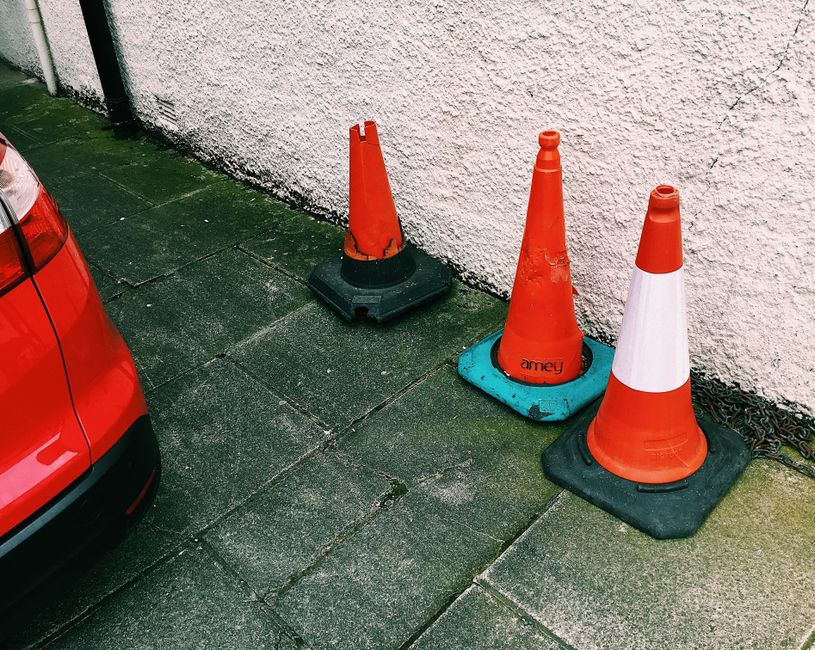
The yard test evaluates your vehicle control in tight spaces without touching boundary cones, lines, or curbs.
Maneuver 1: Parallel Parking
Parallel parking tests your ability to reverse into a standard street parking space smoothly:
- Initial Alignment: Pull up parallel to the front reference vehicle (or line of cones), leaving about 1 meter of space. Align your rear bumper with the front marker.
- First Steering Lock (Full Right): Shift into Reverse (R), turn the steering wheel all the way to the right, and reverse slowly until your car forms a 45-degree angle with the curb.
- Straighten Wheels: Return the steering wheel to the center position (1.5 turns back) and reverse straight until your front bumper clears the front marker.
- Second Steering Lock (Full Left): Turn the steering wheel all the way to the left and reverse smoothly into the parking bay. Straighten your wheels once the car is parallel to the curb.
Maneuver 2: 90-Degree (Reverse Garage) Parking
Garage parking requires backing into a parking bay at a right angle:
- Approach Distance: Drive forward leaving a 1.5 to 2-meter gap between your vehicle and the row of parked spaces.
- Reference Point: Stop when your vehicle's center door pillar (B-pillar) aligns with the center line of your target parking bay.
- Full Lock Steering: Shift into Reverse (R), turn the steering wheel fully toward the parking space, and slowly reverse while checking both side mirrors.
- Centering: Straighten the steering wheel once your car is aligned evenly between the lines, and reverse until fully inside the space.
Maneuver 3: Hill Start (Bridge Test) Without Rolling Backward
The bridge test checks your ability to stop and move off on an incline without rolling backward:
- Automatic Cars: Stop on the ramp with the foot brake, engage the handbrake firmly, and shift to Drive (D). Gently press the accelerator until you feel forward pull, then release the handbrake smoothly.
- Manual Cars: Hold the foot brake and clutch. Raise the clutch pedal slowly to the biting point until the engine pitch changes, apply light accelerator pressure, and release the handbrake.
Maneuver 4: S-Bend & Figure-8 Track Navigation
These tracks evaluate low-speed steering control and your sense of vehicle dimensions:
- Maintain a steady, controlled speed between 5 km/h and 10 km/h.
- Look ahead through the curve rather than staring directly at the front hood.
- Avoid sudden, jerky steering corrections that cause tires to touch boundary lines.
4. The Final Muroor Road Test: What Examiners Look For
After clearing the yard maneuvers, you will take the final road test with an official examiner from the Traffic Department (Muroor).

Examiners evaluate your real-world traffic management, including:
- Signaling Discipline: Turn on your indicator at least 30 meters before making any turn, lane change, or entering a roundabout.
- Roundabout Priority: Yield and give full right of way to vehicles already inside the roundabout.
- Complete Stop at STOP Signs: Bring the vehicle to a full 3-second standstill before the white stop line, even if cross traffic is completely clear.
- Smooth Braking: Apply progressive, gentle brake pressure to avoid sudden jarring stops.
- Reviewing Traffic Laws: Make sure you know all standard road regulations by checking our guide on Saudi traffic rules and driving laws.
Common Mistakes That Cause Instant Failure
Certain safety errors result in an immediate fail on test day. Knowing these in advance helps you stay cautious:
| Mistake | Risk | How to Avoid |
|---|---|---|
| Hitting Curbs or Cones | Collision Risk | Use mirror reference points and avoid rushing steering turns. |
| Rolling Backward on Incline | Vehicle Rollback | Hold the handbrake until engine torque actively moves the car forward. |
| Rolling Past STOP Signs | Traffic Violation | Come to a complete stop for 3 seconds behind the white line. |
| Forgetting Seatbelt | Safety Breach | Fasten your seatbelt immediately upon sitting in the car. |
| Examiner Brake Intervention | Imminent Hazard | Maintain a 3-second safe following distance and moderate your speed. |
| Skipping Blind-Spot Checks | Lane Change Danger | Physically turn your head over your shoulder before signaling and moving. |
What to Do If You Need a Retest
If you miss a specific yard maneuver or need to retake the road test, you keep credit for the parts you already passed:
- Review Examiner Feedback: The examiner records the exact maneuver or habit that needs refinement.
- Schedule Refresher Sessions: Book additional practice hours through your driving school portal.
- Book Your Retest Date: Pay the retest fee through SADAD or Absher and pick your next available appointment.
- Practice Theory Knowledge: Keep your rules and road signs fresh with our verified 35 Saudi driving test questions and answers and take our free All-in-One Mock Test. You can also download the complete Saudi driving test guide PDF.

Mohammed Hamouda
With years of experience in driving regulations, road safety, and compliance auditing, Mohammed plays a crucial role in ensuring the highest standards of driving education and operational integrity. His in-depth knowledge of Saudi traffic laws, driver training programs, and safety protocols makes him a trusted expert in the field. As an author on DrivingTestKSA.com, Mohammed shares valuable insights on obtaining a Saudi driving license, preparing for driving tests, and understanding traffic regulations in the Kingdom.